The cheapest way to upgrade a kitchen is not a new appliance - it is replacing the things you keep buying. Paper towels, parchment paper, disposable pads, plastic wrap: each one is small money until you add a year of receipts. These six swaps from our kitchen and dining collection pay for themselves within a year and, unlike the disposables, they do not run out at the worst moment.
1. The silicone baking mat replaces parchment paper
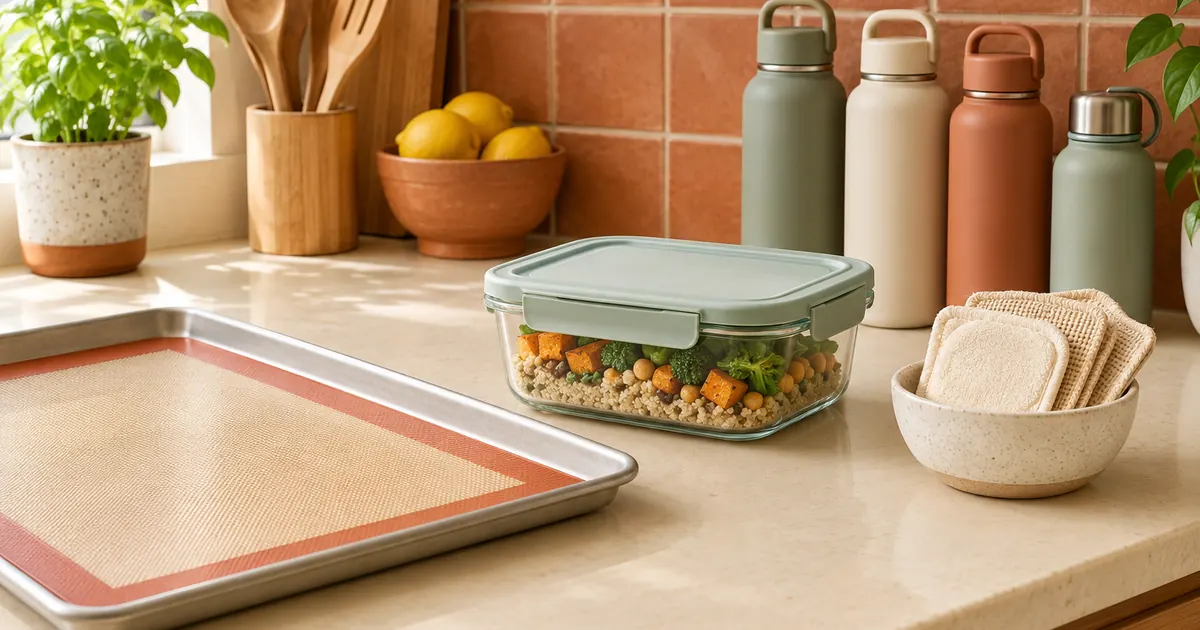
A 16-inch silicone baking mat replaces roughly 500 sheets of parchment in its life. It handles cookies, roasted vegetables, and reheated pizza with zero sticking, wipes clean in seconds, and lies flatter than crumpled parchment ever does. One per half-sheet pan is enough for most households; two if you bake in rotation.
2. Glass containers replace film and foil
A 32-ounce tempered glass container with a leakproof lid does triple duty: fridge storage, freezer storage, and oven-to-table reheating. Glass does not stain with tomato sauce, does not hold odors, and goes from fridge to oven without a transfer dish. The math is simple - one container replaces hundreds of disposable bags and a drawer of mismatched film.
3. Reusable pads replace cotton rounds
Bamboo fiber makeup remover pads in a 20-pack cover a full laundry cycle: use, wash, repeat. They are softer on the eye area than disposable rounds, and the mesh laundry bag most sets include keeps them from vanishing into the dryer. One pack replaces roughly a thousand disposable rounds a year for a daily-routine household.
4. The board set replaces paper plates for prep
A three-piece bamboo board set - large for vegetables, medium for cheese and bread, small for garnish - keeps prep off the counter, which is where paper towels actually go: under chopping, under peels, under drips. Bamboo is hard enough for daily knife work and light enough to wash one-handed.
5. Travel bottles replace hotel minis
Leakproof 3-ounce travel bottles are the swap nobody regrets. Fill them once from your full-size shampoo and you have retired a suitcase of hotel minis - which cost more per ounce than the bottle ever will. The leakproof gasket is the feature to verify; a suction-fit cap is not leakproof, it is leak-delayed.
6. The fan replaces the AC hour
Not a disposable, but the same receipt logic: a USB-rechargeable mini fan on the nightstand or desk replaces an hour of air conditioning on mild evenings. Four inches tall, quiet enough for sleep, charged from the same cable as your phone. It will not replace central air in August - it replaces the hours you run it when you did not need to.
What these swaps are worth per year
Run the receipts and the case closes itself. Parchment, film, disposable rounds, and paper towels run a typical household 150 to 250 dollars a year; the six durable replacements here total under 100 dollars once. The savings are real but the better half of the math is friction: a baking mat never sends you to the store mid-recipe, a glass container never splits open in the gym bag, and the bamboo pad set never leaves you stripping makeup with toilet paper at midnight. Durability is convenience wearing a work shirt - that is the pitch that actually converts a household.
How to make swaps stick
Replace a disposable only when its durable twin is already in the house. A swap that requires remembering to buy the reusable version first is a swap that never happens. Start with the baking mat - it is the cheapest, the most used, and the one guests notice.
The one-in rule that keeps drawers honest
Durable swaps fail the same way disposables do when they multiply: a drawer of fifteen containers where only three stack is still clutter, just more expensive clutter. Adopt the one-in rule - a new durable piece enters the kitchen only when a disposable habit actually ran out. Finished the parchment roll? That is the moment the baking mat enters. Broke the last travel mini? The leakproof bottle set enters. The swap lands when the need is live, not when the sale is on. Households that follow this keep their drawers at three of everything and their trash output still drops by that full bag a month - the goal was never zero purchases, it was zero repeat purchases.
None of these six products will save the planet alone. Together they remove a full trash bag a month from a typical household, and they remove the small recurring annoyance of running out - which, if we are honest, was always the real cost.