A ceramic vase is the rare decor purchase that works in every room and every season, which is exactly why it is also the easiest piece to get wrong. The same white geometric vase can look gallery-grade on a mantel and forgettable on a crowded shelf. The difference is never the vase - it is placement, proportion, and what goes in it. Here is the framework we use when styling pieces like the 10-inch geometric ceramic vase from our home decor collection.
The height rule that fixes most placements
On any surface next to seating, a vase should sit at or slightly below eye level when you are seated - roughly 42 to 48 inches off the floor. On a console or entry table, taller is fine because nobody sits beside it. The common mistake is the opposite: short vases on the floor and tall vases at ear level, which reads as clutter in the first case and hazard in the second.
The 1.5 rule for stems
For fresh or dried stems, total height above the rim should be about one and a half times the vase height. A 10-inch vase wants stems cut to about 15 inches above the rim. Under that ratio the arrangement looks stubby; far over it, the vase disappears and the stems look like they are floating. If your stems came long, cut them - the vase sets the scale, not the bunch.
Group in odd numbers, vary the height
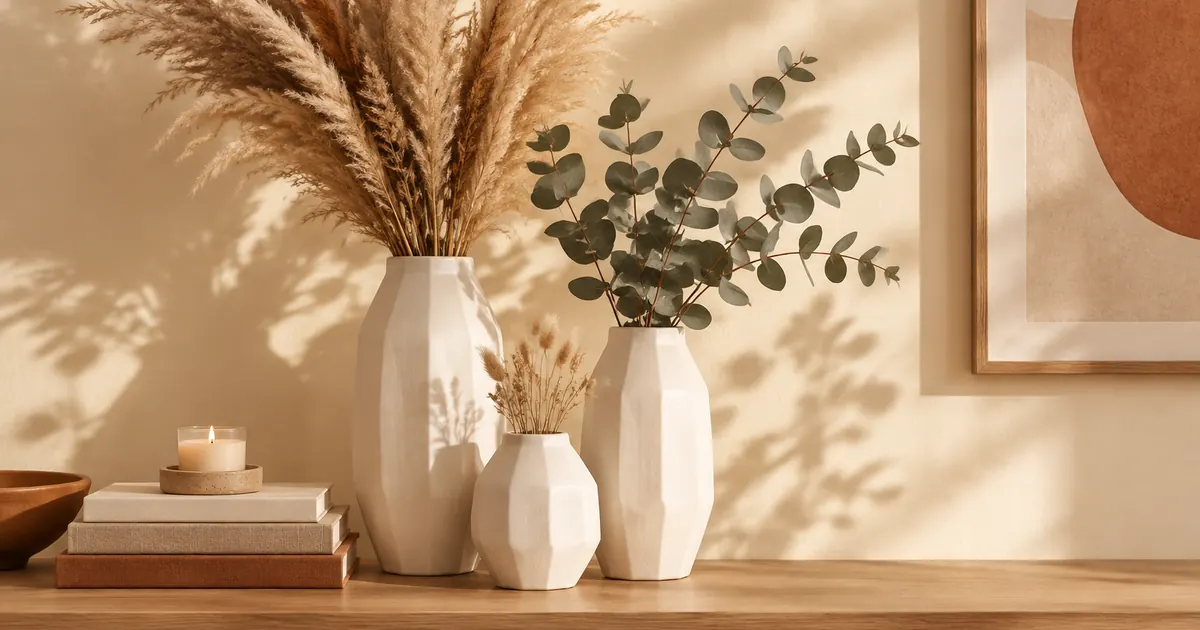
Single vases read best when they are sculptural; groups read best in threes or fives with at least three inches of height difference between pieces. A trio like this works almost anywhere:
- Tall: a 12-inch vase with bare branches or dried pampas - the handcrafted 12-inch vase was made for exactly this role
- Medium: the 10-inch geometric vase with two or three eucalyptus stems
- Low: a candle or stack of two books to anchor the composition
The low element matters most. Without it, a vase group looks like stock waiting to be shelved; with it, the group looks arranged.
Dried versus fresh: pick by light, not by taste
Fresh flowers need a spot that gets used - kitchen tables, entry consoles where you come and go. Dried stems and pampas need almost nothing, which makes them the right choice for shelves, bedrooms, and any spot away from a water source. One honest caveat: dried arrangements hold dust. A monthly blast with a hair dryer on cool keeps them looking new instead of old.
Five placements that always work
1. The kitchen counter end
The dead zone at the end of a counter run takes a medium vase and instantly looks designed. Keep stems minimal here - three stems of anything beats a full bouquet next to cooking mess.
2. The bathroom windowsill
A small vase with a single stem is the cheapest luxury in home decor. Bathrooms have the worst decor-to-effort ratio in the house precisely because nobody tries.
3. The bookshelf break
Shelves of books need interruption every four to six feet. A vase breaks the horizontal line and gives the eye a place to stop.
4. The dining table, off-center
Centerpieces block conversation. Offset the vase to one third of the table and keep it under 12 inches total height - faces stay visible, and the table still reads as styled.
5. The bedroom dresser corner
A vase on the corner of a dresser softens the largest piece of furniture in the room. Pair it with a soy wax candle set and the corner becomes a wind-down station.
Care keeps the color honest
Ceramic glaze is tougher than it looks but not invincible: dust with a dry cloth weekly, avoid abrasive scrubbers on the exterior, and if you use fresh stems, rinse the interior and let it dry fully between uses - standing water is what dulls glaze over years, not use.
Rotating the same vase through the year
A neutral ceramic vase earns its shelf space by changing with the calendar: bare branches in winter, tulips in early spring, dried wheat in autumn. Because the vessel stays constant, the room gets a seasonal update for the price of a bunch of stems - and you stop buying decor to chase seasons entirely. Keep a small box of dried standbys (pampas, eucalyptus, wheat) and the rotation takes five minutes between errands. Pair the autumn rotation with a soy candle set and the whole room shifts season without a single new purchase of furniture.
Buy one vase you like more than you should, live with it in three different spots for a week each, and you will know more about your own style than any inspiration feed can teach you.